During a live incident, your engineers are searching three tools and waiting on Slack. Meanwhile, the incident is still running.
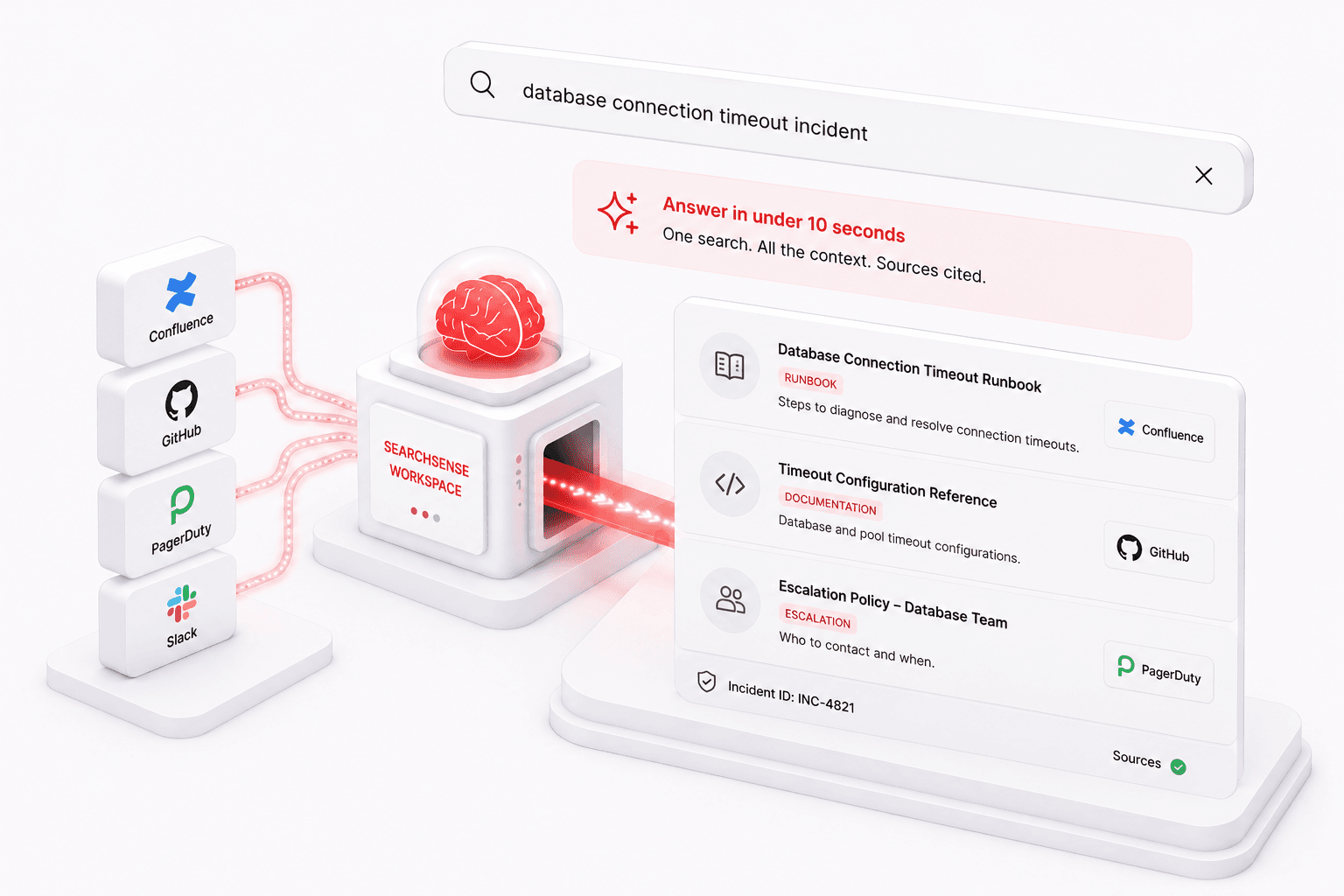
Incident response time is directly related to how quickly engineers can find the right runbook, the right escalation path, and the right historical context. Right now that information is split across Confluence, GitHub, PagerDuty, and a Slack channel. SearchSense Workspace surfaces it in one search, in under 10 seconds, with the source cited.
< 10s
to surface the right runbook, cited to version
8–15 min
average time lost to knowledge search during incidents
$5,400
average cost per minute of downtime for mid-market SaaS
Incident response
A detailed look at the problem, its structural cause, and the mechanism by which SearchSense Workspace solves it.
01
What's actually happening
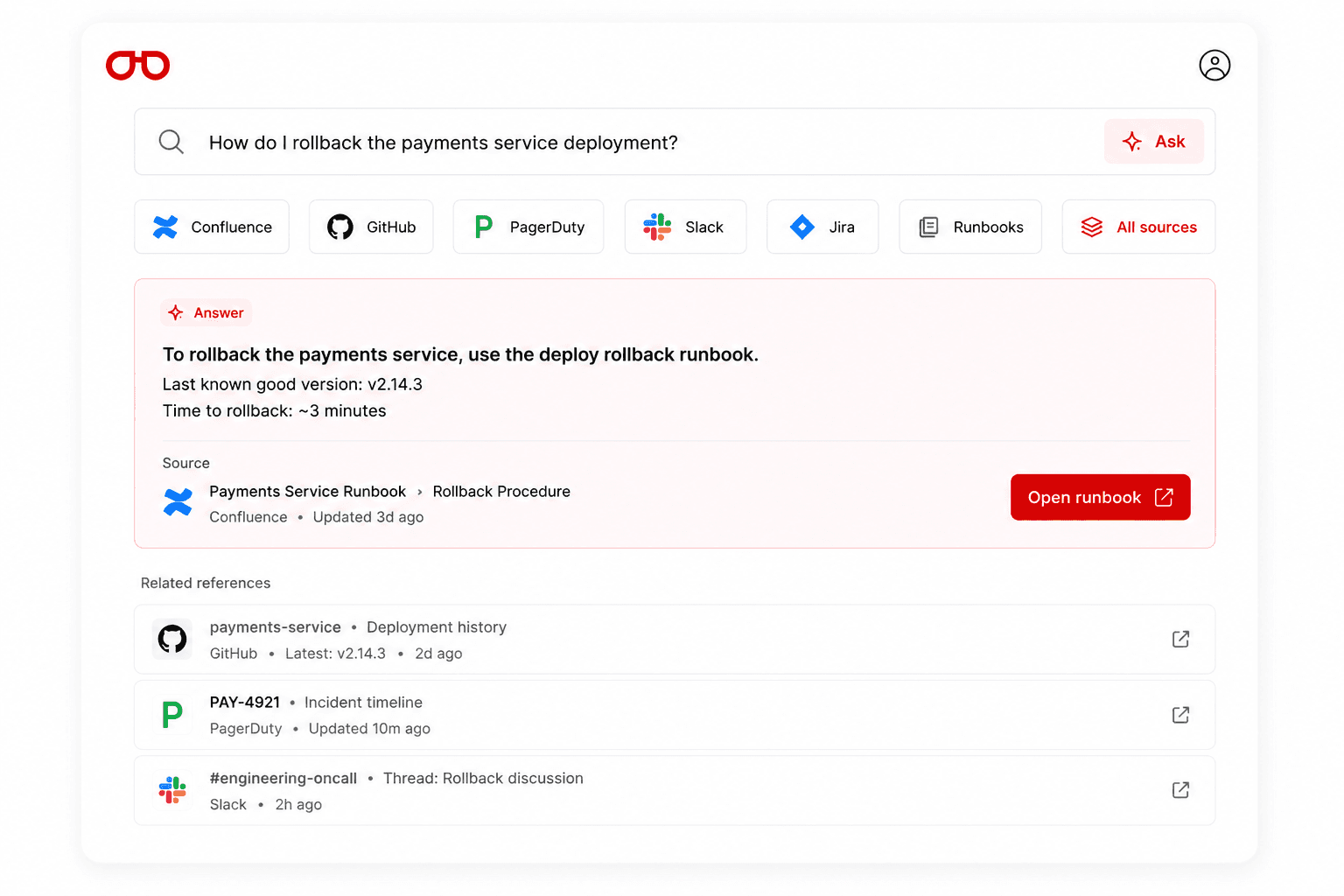
It's 2am. An on-call engineer receives a PagerDuty alert for the payments service. They open Confluence to find the runbook — but can't remember which space it's in. They search GitHub for the relevant deployment history — wrong repo. They post in #engineering-oncall asking if anyone knows the rollback procedure. A senior engineer, now also awake, responds 8 minutes later with the link.
02
The structural cause
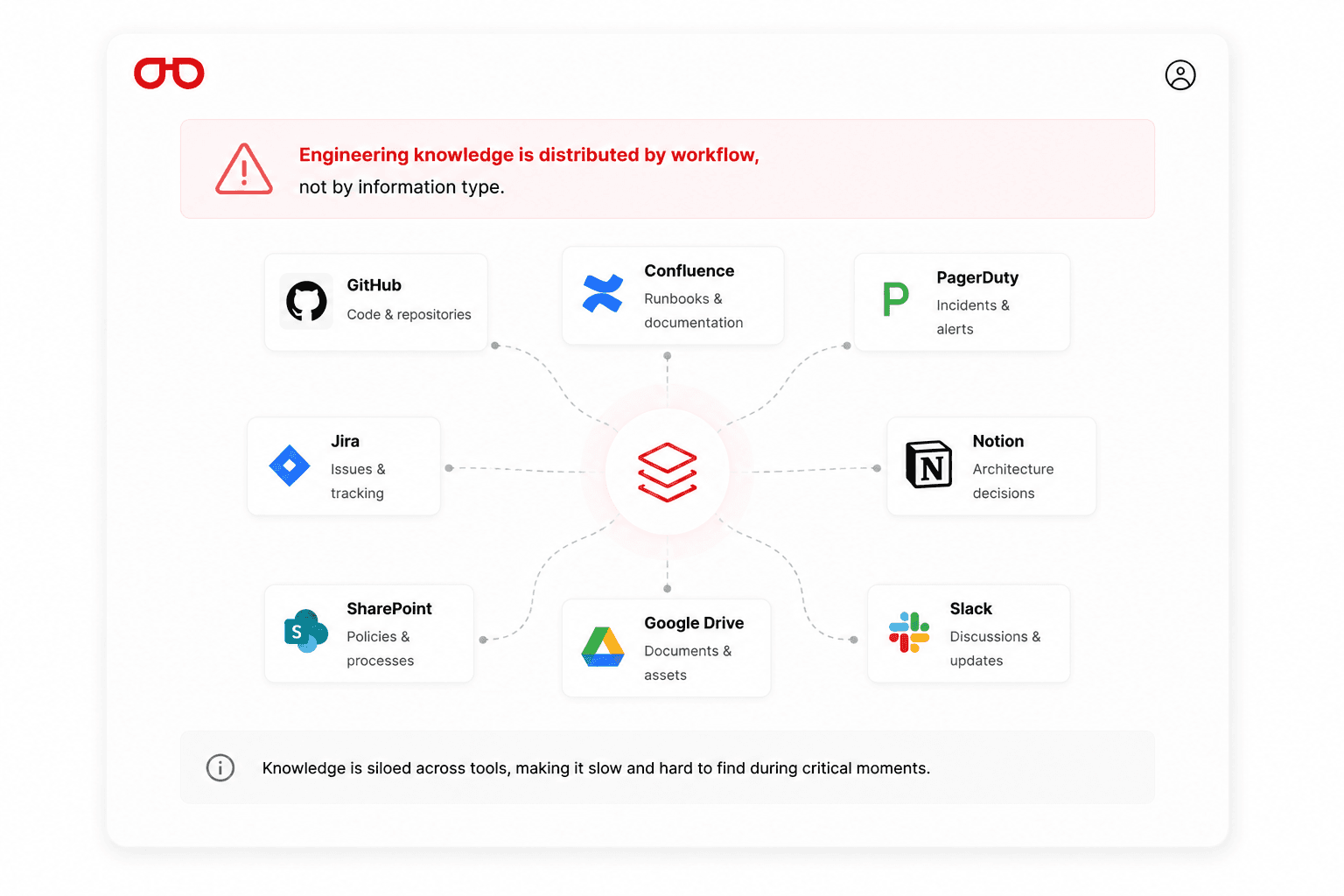
Engineering knowledge is distributed across tools by workflow, not by information type. Code lives in GitHub. Runbooks live in Confluence. Incidents live in PagerDuty or Jira. Architecture decisions live in Notion or a wiki. Post-mortems live somewhere else.
03
The mechanism — not just the claim
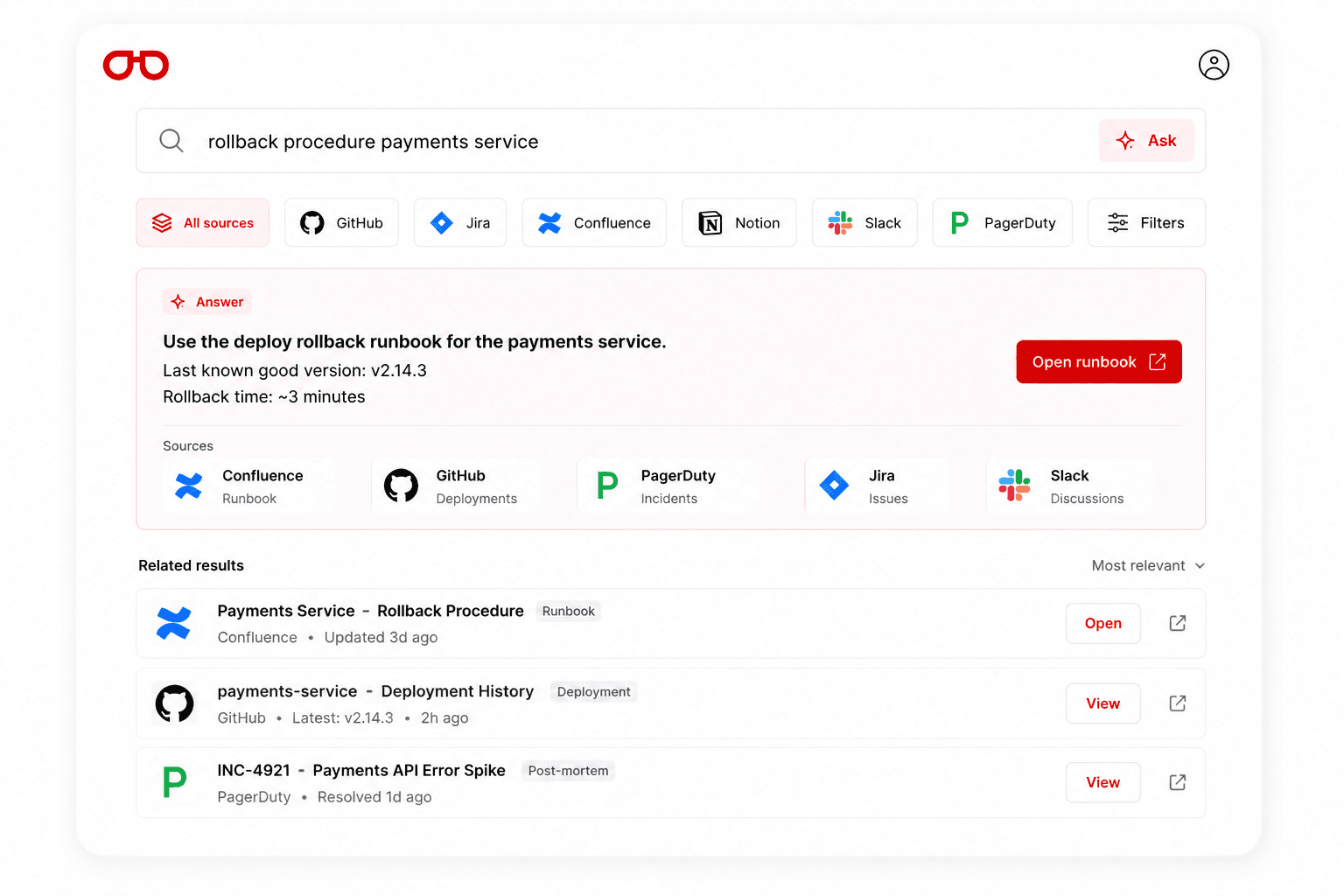
SearchSense Workspace indexes every engineering knowledge source — GitHub, Jira, Confluence, Notion, Slack, and PagerDuty — and makes them searchable from one bar. During an incident, an engineer types 'rollback procedure payments service' and receives the cited runbook, the last deployment record, and the most recent incident post-mortem for that service — all from one query.
Explore all products

 Commerce
AI-powered product discovery for technical catalogs — from 10,000 SKUs to 1 million. Exact match, attribute filtering, and merchandising.
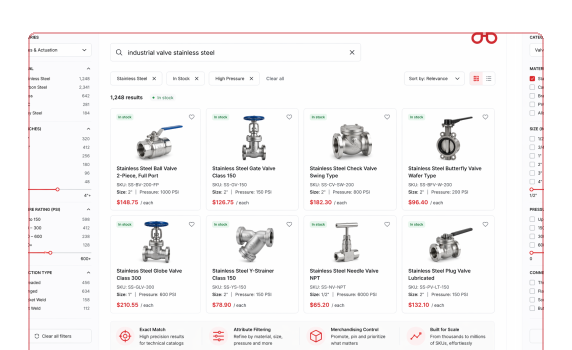

 Workspace
AI knowledge search for sales and operations teams behind your portal. Find any spec sheet, pricing doc, or product PDF in under 10 seconds.
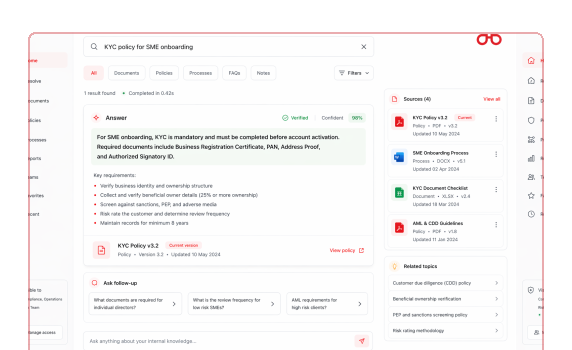
Key capabilities
What SearchSense Workspace delivers for this use case.
Query GitHub, Confluence, Jira, and Slack simultaneously — the right runbook surfaces in under 10 seconds without switching tabs or tools.
Search by service name returns the relevant runbook, deployment history, and incident history for that specific service — no folder navigation required.
Previous incidents for the same service surfaced in search — pattern recognition becomes possible without a dedicated search across historical Jira tickets.
Every runbook result cites the version and last-modified date — engineers know immediately whether they're working with current procedures.
Engineers see only the repositories and documentation their access level authorises — sensitive system documentation scoped correctly without manual management.
Escalation contacts, team on-call schedules, and service ownership indexed and searchable — find the right person without Slack-searching your own contacts list.